If Pumping Hurts, This Could Be Why: Breast Pump Flange Fit
Metropolitan Doulas
What Is a Breast Pump Flange?
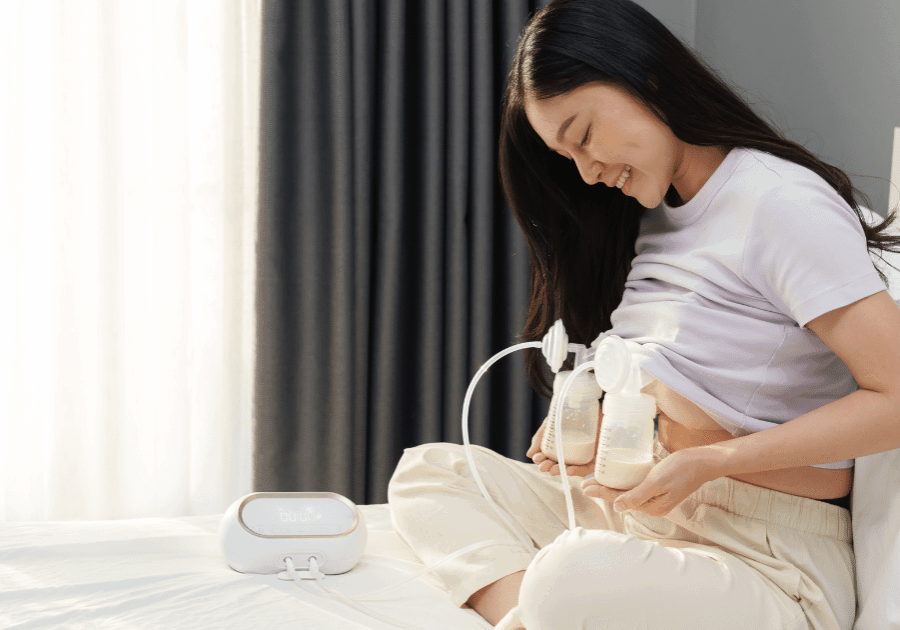
The flange is the part of the breast pump held directly against the breast. It’s the funnel-shaped piece, usually made of hard plastic or softer silicone that surrounds the nipple. The flange provides suction and allows milk expression into the attached bottle or bag. Every breast pump — and there are hundreds of models — comes with flanges. They are a critical part of the pumping system.
The flange sits against the breast and directly affects how the nipple moves during pumping. So its size and fit play a major role in both comfort and milk output. When a flange fits well, pumping should feel gentle and effective. When it doesn’t, pumping can feel painful, frustrating, and inefficient.

This guest post comes from Beka Atwater, a Certified Lactation Counselor and Certified Postpartum Doula. In addition to working with the Metropolitan Doulas team, Beka offers in-home flange fittings for pumping parents in our region. She has completed advanced flange-fitting training with world-leading pumping expert Jeanette Mesite-Frem, IBCLC.
Why “Standard” Flange Sizes Often Don’t Work
Most breast pumps on the market come with a so-called “standard” flange size — usually a 24 mm. For most people, this is actually not the correct size. In fact, assuming the “standard” will work for everyone is like assuming the same size shoe will fit everyone. Our bodies are wonderfully varied — and lactation is no exception!
When a flange doesn’t fit properly, people may notice pinching or rubbing, experience nipple swelling, or develop nipple damage. In addition to these discomforts, they may also notice less milk collection. All of this can make the pumping experience unpleasant and discouraging, leading parents to change or even abandon their lactation goals.
With a correctly fit flange, pumping should feel comfortable. Many parents describe it as feeling like almost nothing at all — or like a gentle, rhythmic tug. Comfortable parents are far more likely to pump regularly, and that consistency plays a major role in maintaining and building milk supply over time.
What the Research Shows About Flange Sizing
New research supports a shift away from “standard” sizing. In the first-ever scientific study examining ideal flange fit, Dr. Lisa Anders and Jeanette Mesite-Frem, IBCLC, indicate that commonly included flange sizes do not appropriately fit most pumping parents. In fact, the majority of people assessed in the study (and in later follow ups) fall in the 12–18 mm range (compared to the “standard” 24-27 mm).
Moreover, there are actually no studies backing the widely used 24 mm flange. Its prevalence dates back to one company’s sales decision that then led to replication across the industry. As a result, many pumping parents use flanges that are too large and cause unnecessary nipple trauma, frustration, and reduced milk output.
How Lactation Providers Think About Breast Pump Flange Fit Today
As with many areas of lactation, best practices evolve as new evidence makes its way into knowledge, attitude, and care. This can take time, which means that not all lactation providers are up to date on the most current research and may still rely on older or outdated guidelines.
When choosing a lactation provider for a flange fitting, it’s completely appropriate to ask where they get their information and how they approach flange fitting. Ideally, you want to work with someone who is current on research, understands that flanges are not “one-size-fits-all,” and regularly does flange fittings. The last (aka practice) is important. Flange fitting is a hands-on, nuanced skill. Providers who actively fit flanges, track comfort and milk output, and base their recommendations on up-to-date evidence are best positioned to help pumping parents find a truly effective and comfortable fit.
What a Professional Flange Fitting Looks Like
When I do a flange fitting, I’m less concerned with the visual appearance of the nipple and more focused on how the client feels. I also closely observe milk output with the pump turned on and try several flange sizes to compare. For example, with one size — say an 18 mm flange — the milk may slowly dribble out. When switching to a 17 mm flange, the milk may spray more forcefully. That difference tells me the 17 mm flange may fit that person better. When these two factors align — the client’s comfort and the quality of milk flow and output — we’ve usually found the right size.
Insurance Coverage
Many parents are surprised to learn that health insurance covers breast pump flange fittings. In the United States, lactation visits are currently required by law to be covered by insurance, and flange fittings are considered part of lactation care. Coverage details can vary by plan, but for most families, this means that an in-home or outpatient flange fitting may be fully or partially covered. Your FSA/HSA may also cover replacing your pump parts.
When Should Parents Assess Breast Pump Flange Fit?
Timing matters. Flange fittings rely on observing real-time milk flow and output, so the best time for an assessment is typically after day five of baby’s life. Around this point, milk production is increasing and milk is actively flowing from the breast — often described as milk that has “come in.” Then it is possible to more accurately gauge how different flange sizes make a parent feel and produce. This information simply isn’t available before milk production matures.
I’ve worked with pumping parents for nine years, and if there’s one thing I know, it’s this: having a correctly fit breast pump flange makes a huge difference in milk supply and comfort. Parents concerned about pumping output or pain can find relief with the proper breast pump flange fit! So, if you have questions about lactation, chest/breastfeeding, or any other aspect of (your) postpartum, Metropolitan Doulas can help. Contact us today for more information on our in-home doula care and start your parenting journey with confidence.
